
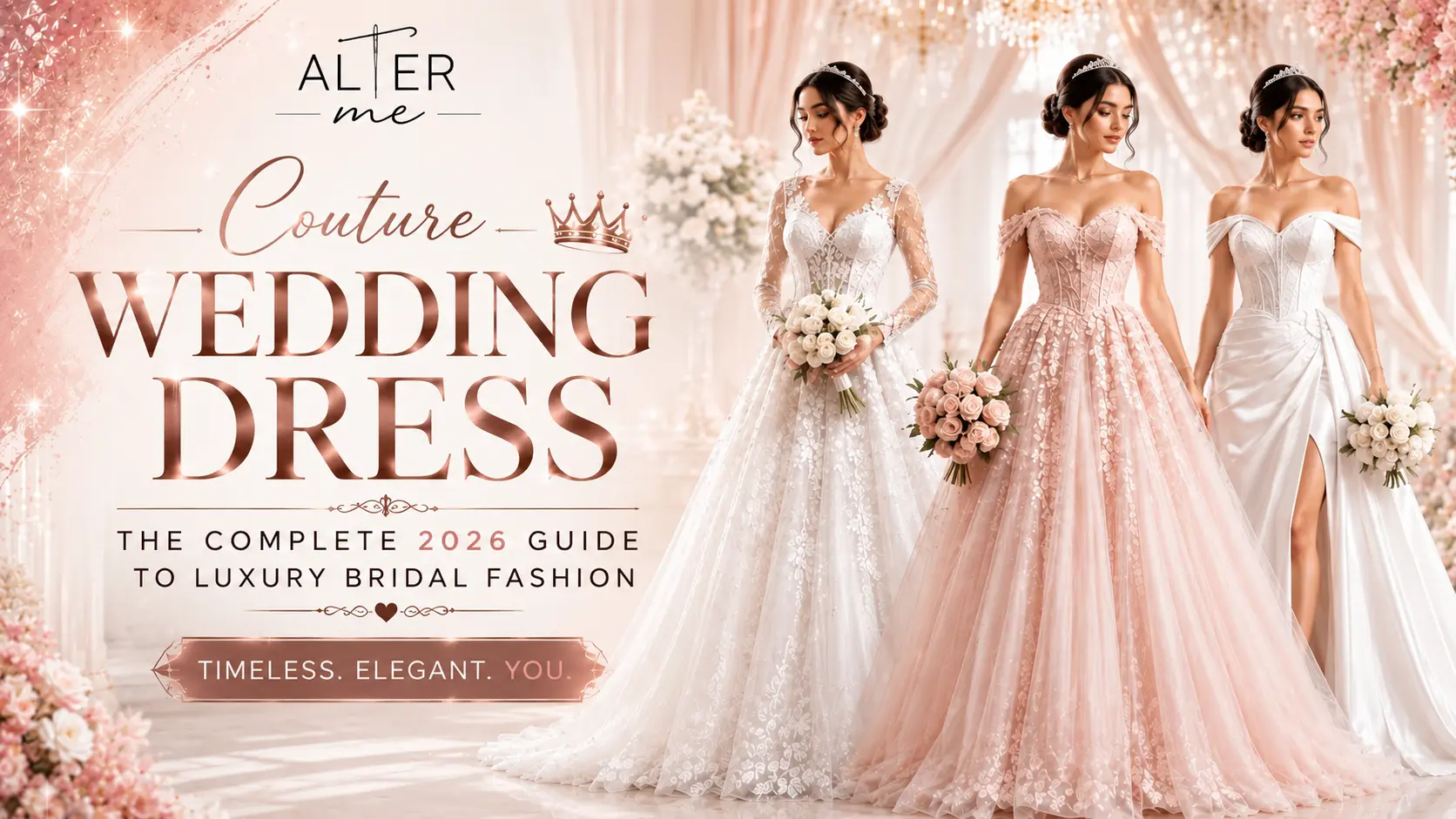
A couture wedding dress is a gown built entirely around one bride, hand constructed through multiple fittings using premium fabric, rather than mass produced in standard sizes. That single distinction, handcrafted and made for you versus made for a size chart, is what defines luxury bridal fashion and explains why these gowns look, feel, and cost the way they do.
A lot of wedding dresses have started looking the same. Same lace, same silhouette, same Pinterest board come to life. Couture pushes back against that. It is slower and pricier, and for many brides, that is precisely the point. According to trends, demand for custom and bespoke bridal gowns has continued to grow among luxury wedding buyers, even as ready-to-wear options expand. Alter Me in Auckland was built around exactly this kind of bespoke philosophy; whether it be with their ready-to-wear collection, or offering bespoke alterations.
This guide covers what separates couture from designer and ready-to-wear, how a couture dress actually gets made, the fabrics and embellishments worth knowing, realistic pricing, the trends shaping 2026, and how to choose the right one.
What Does “Couture” Really Mean in Bridal Fashion?
People throw this word around constantly. Half the time it just means expensive. It means something more specific than that.
-
The True Meaning of Couture
Couture comes from the French word for sewing, an origin that has grown into something far more loaded in fashion circles. Today it points to garments built with a level of precision most people never see up close, the kind that takes years to develop.
In bridal, couture is a process before it is anything else. Private consultation. Several fittings. A form built specifically to one body, with a dress constructed on top of it piece by piece. Every seam placed by someone who has spent years learning to place exactly that seam. Compare that to grabbing a sample off a rack and having it taken in at the sides. The two are barely related.
-
Haute Couture vs Bridal Couture
The term haute couture is legally protected in France and may only be used by fashion houses that meet strict standards established by the French Haute Couture standards. These requirements cover made-to-measure craftsmanship, skilled in-house artisans, and exceptional construction techniques. Bridal couture draws inspiration from these principles, even though most bridal ateliers are not officially recognized as haute couture houses. .
-
Couture as Craftsmanship
The same silhouette, say a mermaid gown, can exist in a factory and in a couture atelier at the same time. What changes is not the shape. It is who is making it.
A factory can produce dozens of identical mermaid dresses in a day. A couture atelier produces one, shaped to a single body, with one person making every structural decision by hand. That is the real dividing line. Not the silhouette, not even the price point. The hands involved.
Expert tip: When comparing two similar-looking gowns at different price points, check the interior construction first, not the embellishment. Hand-finished seams and boning are a more reliable indicator of couture quality than visible beading alone.
Why Couture Feels Different
A lot of what separates couture happens somewhere you cannot see it. Boning, horsehair hems, internal corsetry that most ready-to-wear gowns skip entirely. The craft is as much in what is hidden as in what shows.
Forty-plus hours hand-applying lace appliqué to a single bodice is not unusual. That kind of time investment, paired with serious fabric sourcing, is what earns a dress the word couture, regardless of whose name is on the label.
How a Couture Wedding Dress Is Actually Made
Walking through this explains both the price and the fit in one go.
- The process starts with a design conversation: silhouette, fabric, embellishments, sometimes sketches or a mood board built around the bride’s vision rather than something already on a rack.
- A pattern is then drafted to her exact measurements, not adjusted from a standard block. This step alone is largely what separates true couture from made-to-order.
- Before any expensive fabric is touched, a toile, a rough mockup in muslin or calico, is built and fitted on the bride. Structural problems get caught here, before they become costly mistakes in actual silk.
- Once the fit is confirmed, the final fabric is cut. Silk satin and Chantilly lace are handled with care, since a cutting mistake cannot be undone the way it can with cheaper material.
- Hand sewing and embellishment come next: beading, embroidery, and lace appliqué, usually the most time-consuming part of the entire build.
- One or more final fittings follow, adjusting hems, straps, and structural details before the last finishing touches go on.
- This is why couture timelines run to months rather than weeks. The labour is the cost, not the name stitched into the lining.
Expert tip: Ask any atelier upfront how many fittings are included in the quoted price. Heavily structured or beaded gowns often need an extra fitting that is not always built into a base estimate.
Key Features You Will Notice
Once the process makes sense, the features that define couture start standing out in a fitting room.
-
Handcrafted Details That Tell a Story
Every couture gown carries fingerprints, in a sense. Hand beading goes on bead by bead, not as a pre-made trim applied afterward. Embroidery is often worked directly into the fabric rather than stitched on as a separate piece.
No two couture gowns turn out perfectly identical, even from the same design sketch. That is part of why brides become so attached to them. Each beading pattern and placement decision was made by a real person, about that one specific dress.
-
Luxurious Fabrics That Move
These gowns are built from fabric chosen for how it behaves on a moving body, not just how it looks on a hanger. Silk satin holds its shape but still falls softly. Chantilly lace, with its scalloped edges and floral motifs, adds romance without weight.
Premium fabric costs more, no way around that, but it photographs differently under natural light and ages far better in storage over the decades.
-
Fit That Actually Fits
A made-to-measure dress is checked at every stage, not just once at pickup. Three to five fittings is typical, sometimes more, with small structural adjustments happening each time. This is fundamentally different from buying a rack size and having a tailor pinch the sides in afterward.
-
Elevated Structure and Sculptural Design
Sculpted silhouettes rely on internal structure: boning, horsehair braid, layered tulle, rather than hoping the fabric drapes well on its own. A corset bodice is the clearest example, shaping and supporting the body from the inside so the outer fabric falls exactly as intended, whether that is a soft column or a full ball gown.
-
Luxury Finishing
The inside of a couture gown often gets as much attention as the outside. French seams, fully lined bodices, hand-rolled hems, and a cathedral train weighted just enough to fall correctly are all hallmarks of luxury finishing.
A guest at the wedding will likely never notice any of this. The bride feels it with every step, and it is usually the difference between a train that glides and one that drags or twists throughout the day.
-
Drama Meets Refinement
What is genuinely difficult about couture is balancing both extremes at once. A dramatic ball gown skirt with a corset bodice still has to feel elegant rather than costume-like or heavy. Getting drama and refinement to coexist in one garment is harder than it sounds, and it is usually where the difference between a good atelier and a great one becomes obvious.
Expert tip: Brides wearing heavily embellished couture gowns should keep accessories minimal so the craftsmanship of the dress remains the focal point rather than competing with jewellery or hairpieces.
Couture Wedding Dress Styles
Couture techniques apply to almost any silhouette, which is part of why these gowns feel so personal. The shape is chosen first to flatter the bride, then built using couture methods on top.
-
Ball Gown Couture Dresses
The ball gown remains one of the most requested couture silhouettes: fitted bodice, dramatically full skirt, usually supported by tulle layers or a structured underskirt. It suits brides chasing a fairy-tale moment, particularly in formal venues with a grand staircase or ballroom reception. Brides who love dramatic silhouettes often explore ball gown wedding dresses before settling on a final shape, comparing fitted bodices against fuller skirt proportions.
-
Mermaid Couture Dresses
A mermaid hugs the body from bust to knee, sometimes mid-thigh, before flaring into a fitted flounce. It is one of the least forgiving silhouettes in terms of tailoring, since there is no extra fabric to hide a fit issue behind. Those drawn to this figure-hugging shape can look through mermaid wedding dresses to see how couture detailing changes the line of the gown.
-
A-Line Couture Dresses
The A-line is the most universally flattering shape available, widening gently from waist to hem without ball gown levels of drama. Couture A-line gowns suit brides who want structure but still need to move comfortably through their own wedding day. Brides exploring this shape often find A-line wedding dresses adapt well across a wide range of body types.
-
Fit and Flare Couture Dresses
Sitting between a mermaid and an A-line, fit and flare gowns hug through the hip before releasing into movement around the lower thigh or knee. It is a good middle ground for brides who want some mermaid drama without sacrificing the ability to dance later in the evening.
-
Minimalist Couture Dresses
Minimalist couture proves that luxury does not need to shout. These gowns lean on the cut itself, a single panel of silk satin or one architectural seam, to create impact. Just as much craftsmanship goes into a quiet design as a dramatic one. The result simply does not announce itself.
-
Modern Couture Dresses
Modern bridal blends traditional couture technique with contemporary lines, detachable pieces, and unexpected fabric pairings: a structured corset bodice under a soft, fluid skirt, or vintage lace against a sharp modern neckline.
In practice, the right silhouette has less to do with current trends and more to do with how a specific cut sits on an individual frame. A mermaid that looks stunning on one bride can emphasize the wrong proportions on another, which is exactly why a guided fitting matters more than choosing a shape from a single photo.
Expert tip: Try at least one silhouette outside your initial preference during a first consultation. Many brides end up choosing a shape they had ruled out before seeing it on their own body.
Couture Wedding Dress Fabrics
Fabric is arguably the single biggest factor in how a couture gown looks, feels, and moves on the day.
- Silk remains the benchmark bridal fabric: natural sheen, breathable, and able to catch light in a way nothing synthetic quite manages. It suits most seasons but works especially well for summer weddings.
- Satin has a smooth, lustrous surface with enough body to hold a sculpted shape. Silk satin specifically drapes heavier and more luxuriously than synthetic versions.
- Organza is crisp, sheer, and light, common for overskirts and sleeves where volume is wanted without added weight. It performs well in warmer climates.
- Tulle brings soft volume and movement, used across skirts, veils, and ball gown underlays. It is breathable, making it a strong choice for spring and summer.
- Mikado is heavier and more structured, a favourite for dramatic ball gowns and architectural designs.
- Crepe has a matte, slightly textured finish with a fluid drape, often chosen for minimalist, body-hugging couture looks.
- Lace, particularly Chantilly, adds romance and intricate detail, usually layered over a structured base fabric for depth.
- Charmeuse is light and fluid, glossy on one side and matte on the other, common in soft, draped bias-cut gowns.
Season and venue should drive this decision more than a single photo that caught your eye online. A heavy mikado ball gown can be stunning for a winter indoor wedding and uncomfortable for an outdoor summer ceremony, while silk charmeuse moves beautifully outdoors but may need rethinking for a formal indoor setup.
Expert tip: If choosing between two fabrics for an outdoor wedding, prioritize breathability over visual weight. A lighter fabric that photographs slightly less dramatically is usually a better trade than discomfort for several hours.
Couture Wedding Dress Embellishments
This is where a couture gown turns into something closer to art, almost all of it applied by hand, which is exactly why it takes so long.
- Pearls bring subtle, timeless shimmer, often clustered along necklines or scattered across a bodice.
- Crystal beading catches light dramatically, frequently used to define a corset bodice or add sparkle along a train.
- Sequins offer a more concentrated shine, sometimes layered under sheer fabric for a softer glow instead of overt sparkle.
- Lace appliqué involves cutting individual motifs and hand-stitching them on in a custom arrangement, rather than using one uninterrupted panel.
- Floral appliqués and 3D flowers are sculpted, sometimes from fabric, sometimes from beading, and applied to create texture and dimension.
- Embroidery ranges from delicate thread work outlining a lace motif to elaborate raised designs that take a single artisan dozens of hours to complete.
Couture vs Traditional Bridal Gowns
It helps to separate couture from the standard bridal shopping experience entirely, since the whole process differs, not just the construction at the end.
A traditional bridal appointment usually means trying on samples from a handful of designers, finding the closest match, and having a seamstress adjust it afterward. The dress already exists before the bride walks through the door. Couture flips that order. The dress does not exist yet. It is built from nothing, around her measurements, her preferences, sometimes her own sketches.
People often use couture and designer interchangeably, but they describe different things. Designer refers to who created the design. Couture refers to how the dress is made.
| Factor | Couture Wedding Dress | Designer Wedding Dress |
| Customization | Built entirely around one bride’s measurements and preferences | Designed as a collection piece, sometimes lightly customized |
| Craftsmanship | Hand constructed, often with hand beading and embroidery | Mix of machine and hand techniques |
| Price | Generally higher due to labour and exclusivity | Varies widely, often lower than true couture |
| Production | One-of-a-kind or extremely limited | Produced in multiples across sizes |
| Fit | Refined across several fittings | Standard sizing, altered afterward |
| Materials | Premium bridal fabrics chosen per design | Quality varies by brand and price point |
A designer gown can absolutely use couture techniques, and some designer collections genuinely sit at couture level. The real distinction is that couture always means made-to-measure, hand-finished construction, while designers simply identify the name behind the design.
Ready-to-wear sits at the opposite end of the spectrum: standard sizes from a sample collection, altered afterward. It is the fastest and most affordable route, and works well if a near-perfect size match already exists. Made-to-order sits in between, an existing design cut to actual measurements rather than a generic chart. Couture is the only one of the three where nothing about the gown existed before the first consultation.
Why Brides Choose Couture
The reasons vary, but a handful come up consistently.
Fit is almost always first on the list. Brides who have struggled with standard sizing, due to height, proportions, or a shape that off-the-rack gowns rarely account for, often find couture solves a problem they had assumed was unsolvable. Uniqueness matters too. Knowing no one else will wear the exact same dress carries real weight, even for brides who do not think of themselves as particularly drawn to luxury.
There is also the experience itself: being part of the fitting decisions, watching a dress come together over months rather than buying something finished off a shelf. For some brides, that process matters almost as much as the final gown.
Why Are Couture Wedding Dresses So Expensive?
The price reflects time and skill, not a brand markup.
- Skilled artisans train for years in hand beading, corsetry, and lace appliqué. Their time is genuinely the largest cost in a couture gown, and a single dress can represent hundreds of hours of labour.
- Premium fabric, silk satin, Chantilly lace, mikado, costs more, both for the raw material itself and the specialised mills that produce it.
- Manual work at every stage, cutting toiles, hand-finishing seams, simply takes longer than machine production, and there is no real shortcut without sacrificing quality.
- Exclusive designs are created once, for one bride, rather than spread across hundreds of units sold.
- Quality control happens fitting by fitting, by hand, rather than flagged for a factory line to correct weeks later.
- Seen this way, the price starts making sense. The cost is not the logo. It is the accumulated skill sitting in someone’s hands.
Is a Couture Wedding Dress Worth the Investment?
This depends on what matters most to a particular bride.
Couture makes the most sense for brides who want a fit that genuinely cannot be replicated off a rack, who have a body shape standard sizing consistently struggles with, or who want a design no one else will be wearing. It also suits brides planning to preserve the gown long-term, since couture construction tends to hold up better in storage than mass-produced alternatives. It makes less sense on a tight timeline, since couture construction typically needs several months at minimum, or for brides who would rather direct more of the budget toward other parts of the wedding.
Neither choice is wrong. A ready-to-wear gown altered well can look just as polished in photographs. The decision comes down to whether the process and the personalization matter as much as the result, and whether the timeline allows for it. This is exactly the conversation the team at Alter Me has with brides during a first consultation, since being upfront about timeline and budget early on prevents disappointment later.
How to Choose the Right Couture Wedding Dress
A few considerations make the decision more manageable.
- Body shape should guide the starting silhouette. A mermaid shows curves differently than an A-line, and a good atelier steers a bride toward what flatters her actual proportions rather than whatever is trending that season.
- Venue matters more than most brides expect. A heavily beaded ball gown with a long cathedral train works beautifully in a grand ballroom and falls apart logistically on a beach, where lighter fabric and a shorter train make far more sense.
- The budget should be discussed openly and early. Couture pricing varies enormously depending on fabric, embellishment density, and the number of fittings required.
- Season shapes both comfort and fabric choice. Mikado suits cooler months, while organza, chiffon, and lighter silks breathe better through summer heat.
- Train length should match the venue and reception plan. A cathedral train is dramatic on a church aisle and a genuine hassle across uneven outdoor ground.
- Neckline frames the face and shoulders, and small shifts, sweetheart to illusion to off-shoulder, change the entire feel of an otherwise identical silhouette.
- Fabric choice should balance the desired look against the practical demands of the wedding day itself.
- Accessories should never be an afterthought. Brides finalizing their look often pair the dress with custom veils and other bridal accessories chosen to complement the silhouette and embellishment style of the gown.
Expert tip: Book the first dress consultation before finalizing the venue contract if possible. Knowing the floor surface, indoor versus outdoor setting, and ceremony length in advance makes silhouette and fabric decisions far easier.
Popular Couture Wedding Dress Trends for 2026
Structure paired with softness is the overarching theme shaping 2026.
- Basque waist silhouettes, with that dropped V-shaped line, elongate the torso while still giving a corseted, couture feel.
- Detachable sleeves let a bride wear long sleeves through the ceremony and remove them for the reception, offering versatility without losing drama.
- Overskirts create a transformative effect, with a sleek base gown hidden under a removable, voluminous outer layer.
- Drop waist designs are appearing as a softer alternative to the usual empire or natural waistline.
- Corset dresses remain everywhere, with exposed boning and structured bodices treated as a statement piece rather than something hidden beneath fabric.
- Minimal luxury is trending alongside full maximalism, with brides choosing one architectural fabric or a single dramatic train instead of stacking several embellishments.
- Statement lace is shifting toward bigger, bolder floral motifs rather than delicate all-over patterns.
- Pearl details keep appearing in unexpected places, cascading down a back or scattered through a veil, rather than staying confined to the bodice.
Caring for a Couture Wedding Dress
A couture gown is a real investment, and proper care afterward protects both its appearance and what it means to you. After your wedding, professional cleaning and preservation are essential for protecting delicate fabrics, lace, and hand-beaded embellishments. Following a trusted wedding dress preservation guide can help maintain your gown’s beauty for years to come.
- Storage should use a breathable garment bag, never plastic, hung somewhere cool and dry away from direct sunlight, or laid flat for heavily beaded gowns to avoid stressing the fabric.
- Cleaning belongs with a specialist who understands bridal fabric and embellishment, since standard dry cleaning chemicals can damage delicate lace, beading, or silk.
- Transportation to and from the venue should use a padded, structured garment bag, with heavily beaded or boned gowns carried flat rather than folded.
- Preservation, a deeper specialist clean plus acid-free boxing, is worth arranging within a few months of the wedding, since stains set and become harder to remove the longer they sit.
The Essence of Couture Bridal Fashion
Strip away the price, the hours, and the fabric names, and couture comes down to one idea: a dress built around a person, rather than a person adjusted to fit a dress.
Everything else, the boning, the hand beading, the months of fittings, exists in service of that one principle. It is also why couture gowns tend to hold their shape, their detail, and their meaning decades after the wedding day itself.
Frequently Asked Questions
What is a couture wedding dress?
A couture wedding dress is made specifically for one bride through hand construction, multiple fittings, and premium materials, rather than mass produced in standard sizes.
Why is couture so expensive?
The cost comes from hundreds of hours of skilled hand labour, premium fabric, and a design created for one bride rather than produced across multiple units.
Are couture dresses handmade?
Yes. Most of the construction, including beading, embroidery, and finishing, is done by hand rather than machine.
Is couture worth buying?
For brides who want a fully customized fit, unique design, and heirloom-quality construction, couture offers something ready-to-wear cannot match. Beyond that, it is a personal decision based on budget and priorities.
How long does it take to make one?
Usually three to nine months, depending on design complexity and how many fittings are needed.
Can couture dresses be customized?
Customization is the foundation of couture. Necklines, sleeves, trains, fabric, and embellishment placement can all be tailored to the bride’s preferences.
What fabrics are used?
Silk, satin, organza, tulle, mikado, crepe, lace, and charmeuse are the common choices, selected based on silhouette, season, and how the dress needs to move.
How much does a couture wedding dress cost?
Pricing varies widely depending on design complexity, fabric, and embellishment, and is best discussed directly with the chosen atelier once they understand the bride’s vision.
Can couture wedding dresses be altered?
Yes, though alterations are usually minor by the final fitting since the gown is built to measurements throughout. Larger changes after completion can affect structural elements like boning or beading placement, so adjustments are best raised early.
What is the difference between couture and bespoke?
The terms are often used interchangeably in bridal fashion. Both generally mean a gown built specifically for one person, though bespoke is sometimes used more loosely to include made-to-order pieces that start from an existing design.
How many fittings are required?
Most couture gowns require three to five fittings, though heavily structured or embellished designs sometimes need more to get boning, beading, and hem weight exactly right.
When should I order a couture dress?
Given build times of six to nine months, most brides start the process at least eight to twelve months before the wedding date to allow room for fittings and adjustments.
How long does couture take overall, including fittings?
From the first consultation to the final fitting, the full timeline usually runs four to ten months, depending on design complexity and how far in advance fabric and lace need to be sourced.
Conclusion
A couture wedding dress is built entirely around one bride, shaped through skilled hands, premium fabric, and a process where every detail is intentional rather than mass-produced. The construction itself, from pattern making through to the final fitting, is what separates couture from anything bought off a rack, and it is why these gowns tend to hold their shape, their detail, and their meaning for decades.
Whether the right fit turns out to be a sculpted mermaid, a dramatic ball gown with a cathedral train, or something quietly minimalist, couture craftsmanship can bring that vision to life in a way ready-to-wear simply cannot replicate.
For brides exploring what a custom bridal gown could look like for their own wedding, Alter Me offers a full bespoke bridal experience from our studio in Auckland, New Zealand. Browse our couture wedding dress collection or book a bridal consultation to begin designing a gown made exclusively for you.